
By Tony Grew November 11, 2008 – 11:28
In an echo of the 1980s, broadsheet and tabloid newspapers have carried lurid stories this morning about a play aimed at secondary school kids that urges them to confront homophobia.
FIT, written and directed by Rikki Beadle-Blair, has already been performed in 75 schools nationwide, but an upcoming  performance in Dagenham has caught the attention of Fleet Street.
Two unnamed parents are quoted in The Daily Mail, The Daily Telegraph and the Daily Star as being “uncomfortable” with their children seeing the play.
The papers were strong backers of Section 28, a 1988 amendment to the Local Government Act that barred local authorities from “promoting” homosexuality in schools.
The consequence of the new law was misery and isolation for a generation of lesbian and gay kids, with teachers unwilling to discuss homophobic bullying and some even mocking gay pupils.
It was repealed in 2003.
A recent study by gay equality organisation Stonewall found that nearly two thirds of LGB students reported instances of homophobic harassment.
That figure jumps to 75% of young gay people attending faith schools.
The survey of more than 1,100 young people found that only 23% of all UK schools explicitly condemn homophobic bullying.
92% of gay, lesbian and bisexual pupils have experienced verbal abuse, 41% physical bullying and 17% have been subject to death threats.
30% of pupils reported that adults have been responsible for incidents of homophobic bullying in their schools.
Nearly every interviewed student had heard phrases like, ‘You’re so gay’, and remarks like ‘poof’ and ‘dyke’ in UK schools.
FIT iSean attempt to tackle the issues in a form young people will relate to. Billed as a hip-hop musical, it has been well-received in schools across the country. Feedback from teacherSeand pupils has been encouraging, according to the producers. One teacher in Edinburgh commented: “It was absolutely outstanding! The studentSeand staff were mesmerised.”
A Drill Hall drama group spokesperson said:
“FIT has been developed to tackle the growing problem homophobic bullying in Britain’s schools.
“This touring play has been especially created for Key Stage 3 students – years seven to nine – and specifically complements various learning objectives from the National Curriculum.
“FIT is a bold play about attempting to fit in and trying to stand out in a culture where everything from not liking sport to wearing the wrong trainers is “gay”.’
A father whose 12-year-old son is at the school managed to tell three national newspapers: “Maybe I’m pretty old-fashioned sort of bloke but I don’t want my boy seeing this. I could be wrong but I don’t think its normal to think about being gay at that age.”
In January the Secretary of State for Children, SchoolSeand Families, Ed Balls, launched the first ever national guidance from the government to help schools tackle homophobic bullying.
FIT receives a public performance in Drill Hall 1 at 7.30pm on Saturday 15th November. Tickets cost 15 and 10 for concessions, which include Camden residents.
Beyond the Palin
As America goes to the polls to elect the 44th President of the United States, a previously little known gun totting social conservative, with hard-line views on abortion, gay rights and creationism have caused a media storm, breathing unpredictability into an otherwise electorally forgone conclusion.
Whilst the Palin factor has generated headlines and column inches across the States, and the world, across the Atlantic, this wee spot in Europe has been contemplating another, less famous, evangelical fundamentalist female politician, with equally uncompromising views of the society in which we live.
And so it was this summer, that Iris Robinson, the wife of the First Minister, embarked on an astonishing series of attacks directed at the provinces gay community.
She appeared on BBC Radio Ulster one June morning to belittle the forthcoming Belfast Pride parade, insisting, unsurprisingly, that neither she nor her husband would be in attendance as it was an abomination.
Less than a week later a young man was severely attacked in Ballyduff on the outskirts of Belfast in what the police described as a homophobic attack.
Two days after this attack Mrs Robinson was back on the same BBC show to insist that she had a psychiatrist who worked with her who had a track record in curing’ gay people from their lifestyle choices’.
The inference was clear – this young man was attacked because he was gay, so Iris’s solution was not to challenge the societal homophobia which manifests itself so violently, but challenge the victims of such brutality to change their ways, thus no longer making them a target.
Not content to simply dispense her, albeit questionable, Bible based moral guidance to the LGBT population of Ulster, Mrs Robinson offered a legal -social commentary, by proclaiming during a House of Commons Grand Committee debate that there can be no viler act, apart from homosexuality, than the abuse of innocent children.
Overnight she surpassed the folksy, you betcha, social conservatism of Palin and became something all together more disturbing a hate mongering ayatollah on a moral crusade.
Northern Ireland is, of course, not alien to such medieval bigotry. Last year a joint University of Ulster / University of Queensland study placed the province as the homophobic capital of the west. But the Robinson saga clearly indicated a shift within wider society from passive indifference to outright horror that political leaders in a community with a history such as ours could still hold such a propensity for hatred towards a minority.
An online petition calling for the Prime Minister to censure Mrs Robinson attracted 18,000 plus signatories. Similarly the Belfast Telegraph conducted its own poll, which, on a parochial level, showed some 70% of respondents in favour of her resigning.
These actions, whilst not materialising into some formal governmental reprimand, clearly helped harness broad public opinion and mobilise and unite the gay community over Pride week, culminating in a parade attracting over 7,000 participantSeand featuring representatives of every political party in Northern Ireland, save, of course, Mrs Robinson’s Democratic Unionists.
Northern Ireland’s last acceptable prejudice was finally being challenged across the socio-political spectrum.
Paradoxically, despite the best efforts of the DUP and their cohorts, the gay community in Northern Ireland is thriving, particularly outside the established scene in Belfast and Londonderry.
A new bar has recently opened in the border town of Strabane, whilst regular club nights have arrived in the towns of Newry and Bangor.
And our new gay rugby side, The Ulster Titans, despite the DUP minister for sport decrying their creation as sporting apartheid, walked away with the shield at their inaugural participation at the gay rugby World Cup. Success was hailed with a three part BBC NI documentary celebrating their achievements. The documentary wasn’t voyeuristic, but rather in the typical Ulster fashion of celebrating all achievements emanating from the province regardless of sporting code or sexuality.
Meanwhile governmental funding has provided a development officer for the sector, working to establish and encourage local social and support groups in Craigavon, Lisburn, North Down and the Causeway coast.
This funding, which has underpinned the significant advances the community has made over the last number of years, is due to expire in April. It was allocated by direct rule ministers, before devolution, and as it comes to an end few of us hold out for sensible funding solutions from a DUP led executive.
We wait with baited breath for the publication of our devolved administrations Sexual Orientation Strategy in the coming months, but in this austerian age the excuses for a fledgling executive who can’t even agree to hold a meeting, are all to ready to justify withholding further funds to the community sector.
Famously Tony Blair sympathised with the plight of the moderate nationalist party the SDLP during protracted peace process negotiations, when he noted that their negotiating gravitas was hampered by the fact the did not process a paramilitary wing.
So too the gay community, which has been something of a forerunner in cross community relations in a still divided Northern Ireland, has been underfunded and marginalised by the, perceived, more pressing issue of bridging the sectarian divide.
The new political dispensation does not allow for Protestant Catholic feuding, but political expediency dictates a common enemy is useful particularly for a party whose bread and butter is bible bashing dogma. Just as Palin can deflect questions over her experience and record by playing the God card, Mrs Robinson shored up support from the evangelical core of the Democratic Unionists for her husbands succession of Ian Paisley as leader of that party. The party was not secularising or losing its moral compass by power sharing with Sinn Fein.
Robinson, like Paisley, hates the gays.
Governor Pailn may represent the cliched view of small town America, but Mrs Robinson has exemplified the finest traditions of small minded Northern Ireland.
Given that there has been a 175% increase in homophobic motivated incidents in her own constituency over the past year is it not reasonable to presume that by saying the things she has said the local MP could be stoking tension, giving a degree of kudos to those whose attitudes which are similar to Mrs Robinson’s manifest themselves not over the airwaves, but through acts of violence?
Hate crime law is vague at present, and as such there remains the possibility that by claiming gay people are worse than paedophiles the MP for Strangford is inciting hatred, even if she herself does not throw the punch, petrol bomb or brick.
Aristophanes said that under every stone lies a politician. Under the boulder of homophobia in Northern Ireland still remainSean entire party of government.
Members of the European Parliament condemn the attack at the opening of the Sarajevo Queer Festival
Press release from the Intergroup on Gay and Lesbian Rights of the European Parliament
25 September 2008
For immediate release
“Members of the European Parliament condemn the attack at the opening of the Sarajevo Queer Festival.”
Yesterday the opening of the Sarajevo Queer Festival was brutally attacked and 6 people had to be taken to hospital. The festival is a first of its kind organised in Bosnia-Herzegovina, but unfortunately it has caused negative tensions in the society. Many extremist groupSeand politicians have openly called for violence against homosexual and transgender people.
“We strongly condemn the attacks against the Sarajevo Queer Festival. It is a cowardly behaviour to challenge the views one disagrees with by violence”, said Michael Cashman, President of the Intergroup. “I also need to point out that Bosnia-Herzegovina wants to become a member of the European Union and the country should clearly show that it is ready for membership. AuthoritieSeand society at large must show that they can respect the rights of gays, lesbians, bisexual and transgender people not just in law, but also in practice. Respect for Human rights is at the heart of EU membership”
Sirpa Pietik inen, Vice-President of the Intergroup for the EPP-ED added, “ReligiouSeand political leaders should be aware that the violence of yesterday is a result of their homophobic speeches. They must understand that is not acceptable. Politicians should have the courage to stand up against any kind of violence and protect human rights of every citizen.”
ENDS
For further information on the Intergroup please visit our website:
http://www.lgbt-ep.eu
Representatives of European Parliament’s Intergroup on Gay and Lesbian Rights:
President: Michael Cashman MEP (UK/PSE)
Vice-President: Lissy Gr ner MEP (DE/PSE)
Vice-President: Sophie in ‘t Veld MEP (ALDE)
Vice-President: Ra l Romeva MEP (G/EFA)
Vice-President: Sirpa Pietik inen MEP (EPP-ED)
Pride Cornwall
Wee (upstart) took an interest in Pride Cornwall partly because it is a new matter. And partly because we have received reports over the past year about misbehaviour on the part fo the po9lice and social services in the County.

Either our reports are of very isolated events, or the Pride committee decided that a point could be made better with a smile than with a scowl. I had a chat with Andrew Jolly (‘… as in Father Christmas…’ as he put it. Clearly a man who has heard all the ‘jokes’. I think he was slightly puzzled about my making a bit of a big deal about ‘solidarity’. He said that there had been 500 on the Pride ‘march’, and that the big even that evening was sold out. It had been a most successful Pride.
The one fly in the ointment had been a number of people sitting down in the street at the start of the event. They object to a homosexual demonstration in ‘their’ city. (The possessive seem to irritate Andrew, but that is the style of ‘Bible’ Protestants. They handed out a fairly non-specific glossy tract. They are the Truro Evangelical Church. It has connections with a League of Independent Evangelical Churches. As they did not ask their colleagues about the country to help them, they are (probably) not going to be a long-term nuisance for Pride. (But they will need watching. The Christian Institute may feel the need to provide them with lots of money).
I was on the parade, and talked to an took photographs (which may never be accessible) of lots of people. Starting with a large … jolly… man wearing a black kilt. I asked him if it was a Cornish kilt. ‘No, it’s a Gay kilt!’ I photographed Patches a very handsome greyhound (with traces of border collie?). And a very handsome young man called Richard.
Richard was dressed in ‘Elizabethan’ costume. I didn’t ask if it was some particular ‘Elizabethan’ – these adventurous chaps tended to turn into mass-murderers if they put foot on Irish soil. There were a fair number of people in ‘uniform’ including the man who seemed to be Master of Ceremonies. He wore a modern (British) army Lieutenant’s jacket (but no shirt – and very nice it all was too). He should award himself another pip for this year’s work.
I mention this as a simple observation, there were two people in wheel-chairs on the march (I am not entirely sure if the ‘walk’ was described as a ‘march’). As you may gather from other reports I’m not over-fond of the word, in this context anyway. There were probably more women than men, and lots of dogs (not all as fabulously beautiful as Patches). There were also lots of nice young men (not all as… well…).
The Polis were not out in large numbers. ?Before the Christian Institute got the head-bangers out in Belfast, the RUC / PSNI loved Pride. They had to be out in large numbers because ‘marches’ are contentious in NornIrl. But Pride was just a wee Dander with friendly people (and they got paid for it!). 
We had to climb a hill at the end of the parade. ?Proving that the committee is made up of under-forties. There was also a very narrow path into the park which was our destination. It made for a spectacular, near medieval sight as banners had to be carried at odd angles. They were the banners of Pride, Unison, the PCS union, and the Gay Gordons, from London. (A passer-by tried to put on a sour face, and rather succeeded, until he started steppin’ and leppin’). There were other banners.
One major oddity was that the drum band was at the very back of the parade. It was a rather good drum band, made up entirely (I think) of young fellas. They weren’t just at the back. Their sound was hidden behind a float. Live music is invaluable on this sort of demonstration. They should have been at the front. This is not just a bee in my bonnet. Orange Lodges, which know a lot about parades, go to great trouble and expense to procure the services of decent bands.
Another Struggle: Sexual Identity Politics in Unsettled Turkey
By Kerem ?¢ktem
Source: Middle East Report
What happens when almost 3,000 men, women and transgender people march down the main street of a major Muslim metropolis, chanting against patriarchy, the military and restrictive public morals, waving the rainbow flag and hoisting banners decrying homophobia and demanding an end to discrimination? Or when a veiled transvestite carries a placard calling for freedom of education for women wearing the headscarf and, for transsexuals, the right to work ….
See the rest of the report here: http://www.zmag.org/znet/viewArticle/18843
Martin Prendergast on John Henry & Cardinal Newman
” I slightly disagree with the line [Peter Tatchell has] taken on this. The story re-emerged when Jonathan Wynne-Jones at The Daily Telegraph rang me some weeks ago now about an article he was doing for The Sunday Telegraph. Evidently I’d referred to  Newman and St. John’s burial together a couple of years ago in another interview for the life of me, I couldn’t remember it! After The Sunday Telegraph piece appeared, in which my comments were paraphrased rather than accurately quoted, I got accused by various fundamentalist Catholic blogs of smearing’ Newman see Catholic Action UK ! The story has rumbled on ever since. I, of course, immediately checked that chapter in The Friend [Alan Bray, The Friend, Chicago Press, chapter 7] for the accurate details. There’s been interesting recent coverage in The Tablet both in editorial comment and in its Letters pages.
Interest emerged again a couple of weeks ago. I did interviews with BBC Birmingham and BBC Oxford. The line I’ve been taking is as follows: It’s actually irrelevant to me where Newman is buried and preoccupation with this is a digression. Given that the word ‘homosexual’ had been barely coined when Newman was alive, it’s not entirely appropriate to suggest that he would have had such a consciousness of homosexuality’ or sexual orientation, per se, even though as you suggest, given his profound historical knowledge of the Christian tradition in its broadest sense, he would probably have been aware of the kind of things Alan Bray points to. It’s also inappropriate to read back into the 19th Century our contemporary gay consciousness’
I’d tend to agree with the Oratory superiors’ hypothesis that given the type of person Newman was, had he known he would be raised to the altars’, he would have been the first to submit his obedience to the demands of the Church. Nevertheless, there is simply no way the intensity and depth of his relationship with Ambrose St. John can be airbrushed out of the equation. I’m not calling for them to be exhumed and re-buried together, but cannot agree that the vocabulary used by Newman about Ambrose St. John is poetic’, as was suggested by an interviewer at BBC Oxford, probably given that lead by someone from Birmingham Archdiocese. This was proposed on the grounds that Newman was a great poet e.g writing The Dream of Gerontius , and various hymns. Even if it was poetic’, it begs the question: what level of human reality prompted such intense poetic language.
Some of those who have commented, like Peter Tatchell, reveal their ignorance of Catholic procedureSeand practice and have been too simplistic in ascribing the reason for exhumation as a desire to bury’ the Newman/St. John story. I had heard a couple of years ago that one of the reasons for the delay in confirming Newman’s path to beatification (Blessed) the interim stage in the total process to canonization (Saint) was the investigation of the nature of his relationship with Ambrose St. John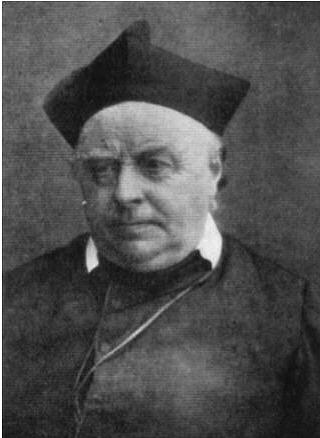 . From what I have heard, Vatican officials were fully aware of its significance, but needed to be assured that such a relationship did not compromise the mutual commitments to priestly celibacy that both Newman and St. John had made as members of the Oratory. This would be perfectly consistent with the current state of Catholic teaching on homosexuality which distinguishes between sexual orientation and sexual activity. In the various interviews I’ve given, I’ve stated very clearly that there is no evidence or suggestion that either of them compromised the demands of celibacy.
The procedures for beatification the first international and public stage in the process to canonization, as opposed to the Venerable’ status which Newman currently enjoys as part of a local (Birmingham/
I have no doubt that there are many in the Vatican who might wish to use such exhumation to bury any homo-positive notions about Newman, just as all sorts of religious authorities, and not just Roman Catholic, have done at various periods throughout history with regard to issues around the place and role of women, and even black people and slaves.
I’ve said that many of Newman’s biographers have attested to the times in his life when he was a tortured and anguished human being, even quite neurotic. There is also a degree of evidence from other sources about his effeminacy, not that this should, of course be equated with a homosexual orientation. If sainthood is about being the best possible human being you are intended to be, then there can be no doubt that part of Newman’s journey towards such a human betterment must be ascribed to the fulfillment achieved through this relationship with Ambrose St. John. Just as many married clergy would say that their vocation and ministry is enhanced because of their Marriage rather than in spite of it, so I’m sure Newman’s life was enhanced by his intense friendship with St. John. It contributed to him becoming the better human being he became, and hence now being venerated by so many CatholicSeand others as a saintly Doctor of the Church.
Underlying this, as well, is the concern in some Vatican quarters that Newman’s sainthood should not be politicised’, e.g. that he be claimed as a gay patron saint’ for example. Such politicising’ reservations have been made in more recent times about Archbishop Romero of El Salvador [I am very familiar with the progress of is beatification process]. In the current Vatican climate of a return to pre-Vatican II models of Church and understandings of theology and ritual, there could also be concerns about how some of Newman’s key theological insights are promoted in the contemporary Roman Catholic Church: the development of doctrine, issues of authority and reception of teaching by the body of the faithful, the rights of conscience, etc.
Link to Wikipedia: ?John Henry Newman and Ambrose St. John, also extract from ‘Life of Cardinal Newman’ about Ambrose
Devise our Programme of events for 2009 – GLAD
With 133 days left until Christmas GLAD is now focusing on developing another exciting programme of events for 2009.
During 2008 we have held many interesting events, ranging from our First Birthday party on 10 March to Crazy Golf, Community Safety briefing, Photography competition, Health and Wellbeing Fair and many more. More is also to come with Interior Design event on 2 September 2008, Dance Lesson, Pottery, Sam BummerSeand Christmas Dinner.
We aim to emulate such a successful programme of events in 2009 and have therefore arranged a day where lesbian, gay and bisexual people can come along and help devise our Programme of events for 2009.
It will be fun day where everyone will have an opportunity to contribute ideas.
The event will commence at 10am on Saturday 4 October 2008 at Portaferry Hotel, 10 The Strand, Portaferry, BT22 1PE with a full cooked breakfast, or something more healthy for those keeping an eye on their figure!
We will then discusSeand agree our programme of events after breakfast at approximately 11am breaking for a two course lunch at 1pm. We aim to finish at about 4pm with tea and coffee at 3pm.
The event will be independently facilitated.
Some of us then intend to visit Rioja Mediterranean Bistro, High Street, Bangor and then boogie at Betty Blacks later in the evening. If you are interested in this informal add-on please email mail@andrewmuir.
Anyone wishing to attend the Development Day should book their place before end of September 2008. Whilst the event is part funded by North Down Borough Council a charge of 10 per person should be paid beforehand to cover costs of catering etc.
This can be paid in person to a GLAD Management Committee member, via cheque (made payable to Gay and Lesbian across Down) to PO Box 317, BANGOR, BT20 9BU or online using Credit or Debit card at http://www.andrewmu
If you want a lift to the hotel please email info@gladni.
Andrew Muir
Vice Chair – Gay and Lesbian across Down www.gladni.org| 07791 398 438 | PO Box 317, BANGOR, BT20 9BU
5 Shaftesbury Road, Bangor, BT20 3GB
Home telephone 028 9146 3404 Mobile 07813 945411 Work telephone 028 9035 5402
Email: mail@andrewmuir.
Belfast Pride – Today and our Future
I unfortunately was unable to attend the Belfast Pride this year; but I was there in spirit as I was one of the
organisers who organised the first Prides in Belfast, and well remember our small but die-hard numberSeand the every present religious organisations who presented themselves at the City Hall against our community.
The photos (link here) which have been provided by one of the Pride walkers indicates that Pride has got bigger and better, and that some (but not all) political partieSeand unions have realised that ‘human rights’ is something for everyone.
I am also prividing links to the Belfast Telegraph (One and Two), which this year has carried two video commentaries on the Pride festival – well done to them.
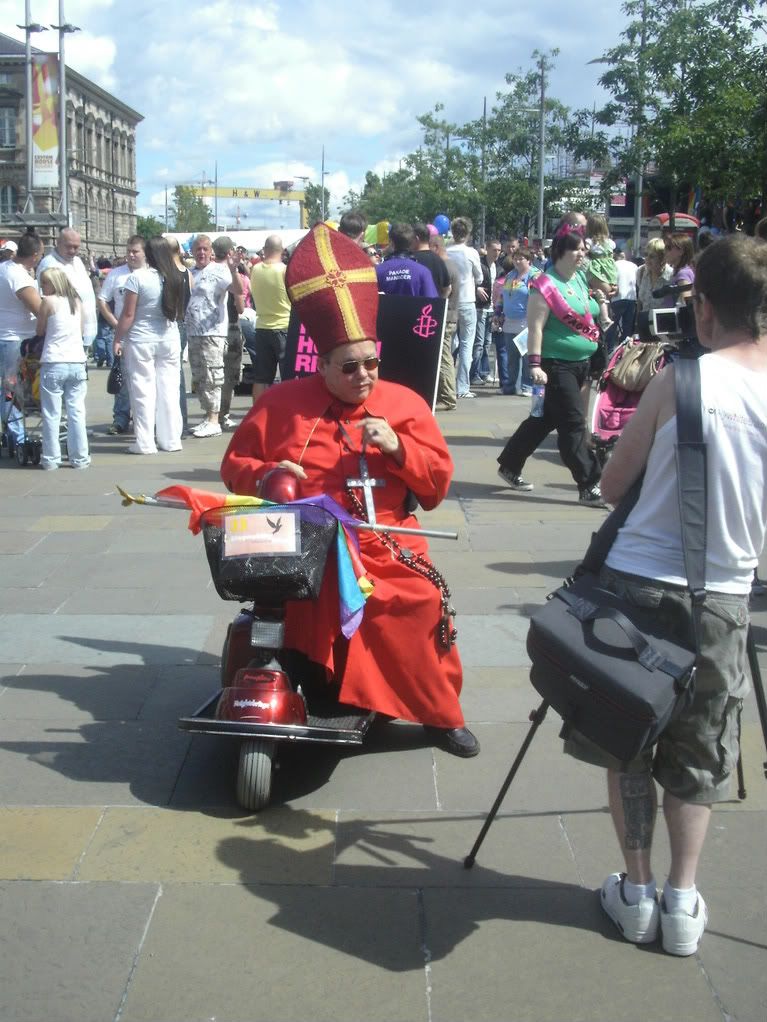
Homosexuality: It isn’t natural
PETER TATCHELL says biology is not destiny. One-sided genetic
explanations of homosexuality are crude, simplistic and doomed to
failure.
http://www.spiked-online.com/index.php?/site/article/5375/
A few years ago, Dr James Watson, the Noble Prize winner who
co-discovered DNA, reopened the controversy over the so-called gay
gene when he defended a woman’s right to abortion. He was quoted in
The Sunday Telegraph as saying: “If you could find the gene which
determines sexuality, and a woman decides she doesn’t want a
homosexual child, well, let her (abort the foetus)”.
Much of the reaction to Dr Watson’s statement focused on its
homophobic versus freedom of choice implications. Largely overlooked
was the fact that such an esteemed scientist was giving credibility to
the flawed theories which claim a genetic causation of homosexuality.
These theories have been given a recent boost by research suggesting
differences in the brain structures of gay and straight people.
According to gay gene theory, genetic factors are responsible for
sexual orientation, with our genetic inheritance programming us to
desire one sex rather than the other. This is a very simple,
deterministic thesis: A causes B.
I don’t disagree that genes (and hormonal exposure in the womb)
influence sexual orientation. The scientific evidence for these
biological influences is presented in the book, Born Gay (2005),
written by Glenn Wilson of the Institute of Psychiatry in London and
Qazi Rahman, a lecturer in psychobiology at the University of East
London.
But contrary to what the authors seem to suggest, an influence is not
the same as a cause. GeneSeand hormones may predispose a person to one
sexuality rather than another. But that’s all. Predisposition and
determination are two different things.
There is a major problem with gay gene theory, and with all theories
that posit the biological programming of sexual orientation. If
heterosexuality and homosexuality are, indeed, genetically
predetermined (and therefore mutually exclusive and unchangeable), how
do we explain bisexuality or people who, suddenly in mid-life, switch
from heterosexuality to homosexuality (or vice versa)? We can’t.
The reality is that queer and straight desires are far more ambiguous,
blurred and overlapping than any theory of genetic causality can
allow.
After studying the sexual experiences of thousands of men, Dr Alfred
Kinsey presented evidence, in Sexual Behaviour In The Human Male
(1948), that “many males combine in their single histories, and very
often in exactly the same period of time, or even simultaneously in
the same moment, reactions to both heterosexual and homosexual
stimuli”.
Some years later, the Kinsey researchers famously reported the case of
a happily married young woman who, ten years into her marriage,
unexpectedly fell in love with a female friend. Divorcing her husband,
she set up house with this woman. Many years later, despite a
fulfilling on-going lesbian relationship, she had an equally
satisfying affair with a man. Examples of sexual flexibility, like
that of this woman, don’t square with genetic theories of rigid erotic
predestination.
One of the main original proponents of gay gene theory, Dr Dean Hamer,
now concedes that it is unlikely that something as complex as human
sexuality can be explained solely in terms of genetic inheritance. He
seems to accept that while genetic factors may establish a
predisposition towards homosexuality a predisposition is not the same
as a causation.
Many studies suggest social factors are also important influences in
the formation of sexual orientation. These include the relationship
between a child and its parents, formative childhood experiences,
family expectations, cultural moreSeand peer pressure.
By about the age of five or six, a combination of biological and
social influences seem to lay the basis of an individual’s sexual
orientation. Because our sexuality is fixed at such an early age, many
lesbianSeand gay men feel they have been homosexual all their lives
and therefore mistakenly conclude that it must be genetic and that
they were born queer.
They also see the gay gene explanation as a useful defence against the
arguments of the religious right, which dismisses same-sex
relationships as a lifestyle choice. But no one sits down one day and
chooses to be gay (or straight). Sexual orientation is not a choice
like choosing which biscuits to buy in a supermarket. We don’t have
free will concerning the determination our sexual orientation. Our
only free will is whether we accept or repress our true inner sexual
and emotional desires.
The relative influence of biological versus social factors with regard
to sexual orientation is still uncertain. What is, however, certain is
that if gayness was primarily explainable in genetic terms we would
expect it to appear in the same proportions, and in similar forms, in
all cultureSeand all epochs. As the anthropologists Clellan Ford and
Frank Beach demonstrated in Patterns Of Sexual Behaviour (1965), far
from being cross-culturally uniform and stable, both the incidence and
expressions of same-sex desire vary vastly between different
societies.
They found, for example, that young men in some tribes (the Aranda of
Australia, Siwan of Egypt, Batak of Sumatra, Anga of Melanesia and
others) had relationships with boys or older male warriors, usually
lasting several years, often as part of manhood initiation rituals.
Eventually ceasing homosexual contact, they subsequently assumed
sexual desires for women.
If sexual orientation was genetically prefixed at conception, as the
proponents of the gay gene claim, these young men would never have
been able to switch between heterosexual and homosexual relations with
such apparent ease.
Likewise, a glance at history reveals huge disparities between
configurations of homosexuality in different eras down the ages.
Same-sex behaviour in Ancient Greece was very different, in both its
prevalence and particular manifestations, from homosexuality in
Confucian China, Renaissance Italy, Meiji Japan, Tudor England and
late twentieth century USA. Moral values, social ideologieSeand
cultural expectations – together with family patternSeand parent-child
interaction – seem the only credible explanation for these massive
historical divergences.
Despite obvious theoretical and empirical weaknesses, the claims that
certain genes cause homosexuality have been seized upon and vigorously
promoted by many in the lesbian and gay rights movement (especially in
the US).
The haste with which these unproven, questionable theories have been
embraced suggests a terrible lack of self-confidence and a rather sad,
desperate need to justify queer desire. It’s almost as if those
pushing these theories believe we don’t deserve human rights unless we
can prove that we are born gay and that our homosexuality is beyond
our control: ‘We can’t help being fagSeand dykes, so please don’t
treat us badly’. This seems to be the pleading, defensive sub-text of
much of the pro-gay gene thesis.
Surely we merit human rights because we are human beings? The cause of
our homosexuality is irrelevant to our quest for justice. We are
entitled to dignity and respect, regardless of whether we are born
queer or made queer, and irrespective of whether our homosexuality is
something beyond our control or something freely chosen.
The corollary of the ‘born gay’ idea is the suggestion that no one can
be ‘made gay’. This defensive argument was used by some gay leaders
during the campaigns against Section 28, which banned the “promotion”
of homosexuality by local authorities, and again during the lobbying
of parliament for the equalisation of the age of consent.
Supporters of Section 28 and opponents of an equal age of consent
justified their stance with the claim that people need to be protected
against ‘pressure’ and ‘seduction’ into the homosexual lifestyle.
Some gay spokespeople responded by arguing that it’s impossible to
‘make’ someone gay, and that a same-sex experience at an early age
cannot ‘persuade’ a heterosexual person to become homosexual.
At one level, they are right. Sexual orientation appears to become
fixed in the first few years of life. For most of us, it is impossible
to subsequently change our sexual orientation.
However, what definitely can change as people grow older is their
ability to accept and express formerly repressed queer desires. A
person who is ostensibly heterosexual might, in their mid-30s, become
aware of a previously unrecognised same-sex attraction that had been
dormant and unconscious since childhood. Society’s positive
affirmation of homosexuality might help such a person discover and
explore those latent, hidden, suppressed feelings.
The homophobes are thus, paradoxically, closer to the truth than many
gay activists. Removing the social opprobrium and penalties from queer
relationships, and celebrating gay love and lust, would allow more
people to come to terms with presently inhibited homoerotic desires.
In this sense, it is perfectly feasible to ‘promote’ lesbian and gay
sexuality and ‘make’ someone queer. Individuals who have a homosexual
component in their character, but are inhibited by repression or
guilt, definitely can be encouraged to acknowledge their same-sex
attraction and act upon it.
Were future generations to grow up in a gay-positive, homo-friendly
culture, it’s likely that many more people would have same-sex
relationships, if not for all of their lives at least for significant
periods. With this boom in queer sex, the social basis of homophobia
would be radically undermined.
In this state of greater sexual freedom, where homosexuality becomes
commonplace and ceases to be disparaged or victimised, gayness would
no longer have to be defended and affirmed. Gay identity (and its
straight counterpart) would thus, at last, become redundant. Hurrah!
Jeff Dudgeon
Hate Capital of USA
The DVD of 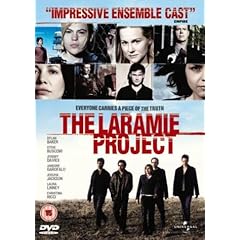 The Laramie Project could be accused of going straight for the tear ducts but it also has a substantial, and in many ways, subtle argument, which is sustained to the end. It’s a fairly simple argument, in essence; Thou shalt not kill’. Not even if you are the State of
The Project was the gathering by members of the Tectonic Theatre group of viva voce witness from the people of the town of
Matthew Shepard  was robbed, ferociously assaulted, and left tied to a wooden fence in the open
Some attempted to do so, one man chaseSean interviewer off his porch, a woman points out that a veteran State Trooper ( one of our own) had been killed, in an accident, on the same night as Matthew, she also implied that he was flaunting’ himself and was a bar fly’. I assume that we are supposed to disapprove of this, and admittedly, it is just a bit cold-blooded. People who lived in
Many interviewees stated that they were shocked that the killers came from
The latter, or their relations, attempted to float a vague class’ excuse Matthew Shepard was evidently well-off (his mother was a university teacher, and his father worked in oil’). He (Matthew) had travelled in
The details of Matthew’s injuries shocked everyone involved in the investigation of his killing, including the policewoman who was called to help when a Good Samaritan found him. (She is brilliantly played by Amy Madigan, Matthew was HIV+ and she got substantial quantities of his blood on her hands. She had cut them in several places when trying to save Matthew an upbeat moment at the end of the film is her barbecue celebrating her HIV negative status). Matthew was unrecognisable, covered in blood, and tied to the fence so tightly that it took and experienced police operative quite a long time to cut the twine used to tie him up. These are classic Portsmouth Defence’ signs designed to destroy the victim’s humanity it did not succeed in this case. And has, thankfully, become defunct as a ploy in law courts.
Moises Kaufman (played by Nestor Carbonell) directed the stage original of this drama. A number of big names’ play very small parts, like Joshua Jackson and Summer Phoenix, and Peter Fonda and Steve Buscemi, as medical personnel, and Francis Sternhagen (a famous Broadway, or more likely, off-Broadway performer) who plays the policewoman’s mother. Of the Tectonic Theatre team, James Murtaugh had the less than pleasant task of playing the Reverend’ Fred Phelps, who inevitably made an exhibition of himself, (and his children) at Matthew’s funeral. Michael Emerson played the Phelps-like Reverend’, and Tom Bower the sympathetic Catholic priest Fr. Roger Schmit.
I suspect that even the most detached persons, will feel strong emotions while viewing this movie. They will consist of what the ancient Greeks thought was necessary for catharsis terror and pity. All Gay women and men will also feel deep anger that such things can happen at all, much less at this point in our liberation. It is rather cold comfort, but clearly a great many non-Gay people feel the same way.
Se n McGouran ?