ACOMSDave

Community Journalist

  • Home
  • Community Journalist
  • Events
  • Media Page and Press Kit
    • Projects and Work
  • Resources & Documents
    • LGBTQ+ Support Groups and Documents
  • NIGRA
  • Archives
  • Contact

Pandemic Impact on our LGBTQ+ Youth

14/05/2021 By ACOMSDave Leave a Comment

Pandemic Impact on our LGBTQ+ Youth


In 2018 whilst discussing ‘Rainbow Colours At Ards Town Hall’ reference was made to a report on suicide prevention from the World Health Organisation, Pandemic Impact on our LGBTQ+ Youthand the methods of measuring suicide attempts.  Reference was also made to the Rainbow Project report ‘Through Our Minds’ which indicated that 25.7% of those who responded, ‘had at least one attempt at suicide.’

But this is not the whole story, the following table gives a more concrete overview of the facts and figures:

General population (suicide attempt ever) LGBT population (suicide attempt ever) General population (suicide attempt past year) LGBT (suicide attempt past year)
Northern Ireland 4% 25.7% ? 6.17%
Great Britain 4.4% ? 0.5% 4.02%*
Ireland 7%** 21.4% 1.68%** 5.63%


*Excluding transgender people, recalculated on the basis of the two studies (2008; 2011) taken together
**Aged 17-25


LGBT Ireland’s Annual Report

LGBT Ireland’s Annual Report for 2020 published yesterday (May 10) highlighted how the LGBTQ+ community was affected by the COVID pandemic with a higher number than ever of younger people calling the LGBT Ireland helpline with a correlating uptake in online peer support groups….[FactcheckNI(https://factcheckni.org/articles/have-1-in-4-lgbt-persons-attempted-suicide/)]

So why am I raising this again?  We are all still living and working within the pandemic and its impact on all of the community within the United Kingdom.  However, the LGBT Ireland’s Annual Report covering the year 2020, has highlighted the LGBTQ+ community was affected by the COVID pandemic with a higher number that ever of young people calling the LGBT Helpline.

Pandemic Impact on our LGBTQ+ YouthBut in Northern Ireland, I would also suggest that the number of calls for support whether by phone, text or online will have gone up.  Our youth have also suffered from the impact of the pandemic, and so many reports, studies and articles over the period have indicated that for so many that had to return home from university halls, or from rented accommodation which they could no longer afford had the ‘return to the closet’ syndrome as they either were not out to their families, or their families preferred that they kept a low profile.

The cancelling of so many venues and the limitation of support groups has also brought further psychological pressure on our LGBTQ+ youth.

Indian Variant

Today we heard that we are moving forward towards new normality, however almost immediately we are being told about the ‘Indian’ variant and that if the numbers continue to increase from this it may lead to local or limited lockdowns. 

None of us knows the future, and indeed the one thing that is guaranteed apart from birth, death and taxes (which are bound to go up due to Brexit fallout and the pandemic costs) is that the pandemic is here forever, and that it is down to us all to be sensible and use the skills we have developed over the last 15+ months, but also that we need to think carefully on how we can support and care for our youth ( and indeed everyone).


Links:

  • Number of young LGBTQ+ people seeking support for loneliness in Ireland reaches ten year high
  • Finding Shelter for Homeless LGBT Youth
  • Russia’s LGBT youth left isolated, victimised by “gay propaganda” law

Filed Under: Community Journalist Tagged With: Ards Town Hall, calls for help, Indian Variant, LGBT Ireland Annual Report, LGBTQ+ suicide, pandemic, Rainbow project, suicide, Through Our Minds, World Health Organisation

Northern Ireland Water and Meter Charges

29/04/2021 By ACOMSDave Leave a Comment

Northern Ireland Water at our doorstep

Ireland Northern Giants – Free photo on Pixabay

Northern Ireland Water is a finite resource.  Rainfall in Northern Ireland is variable, with the monthly rainfall varying from year to year.  According to statistics produced by Statista, since 2010, winter has on average been the wettest season, however, in 2019, winter was in fact the driest season with summer that year being the wettest.

Also, when compared to the rest of the UK, Northern Ireland receives less rain than both Scotland and Wales.

In a letter dated 12 April 2012, in response to a Freedom of Information (FOI) request, Northern Ireland Water stated that 25 reservoirs, which you would think might be enough for our needs.

However, Sir James Bevan in his March 2019 speech cautioned that the country is facing “an existential threat” and reaching “the jaws of death … we will not have enough water to meet our needs.”

With this in mind, I now would like to re-look at how the Northern Ireland Water organisation works.  NI Water is a Government Owned Company (GoCo).  The main characteristics of which are:

  • Its constitution is set out in Memorandum and Articles of Association.
  • It is unambiguously under public sector control.
  • It is established under and must conform with companies’ legislation.
  • Over 50% of ordinary share capital owned by the government.
  • Shareholders may receive regular dividend payments.
  • There is an accountability relationship with a sponsoring Department, and
  • It is permitted to recover costs and build up reserves through trading operations.


Northern Ireland Water

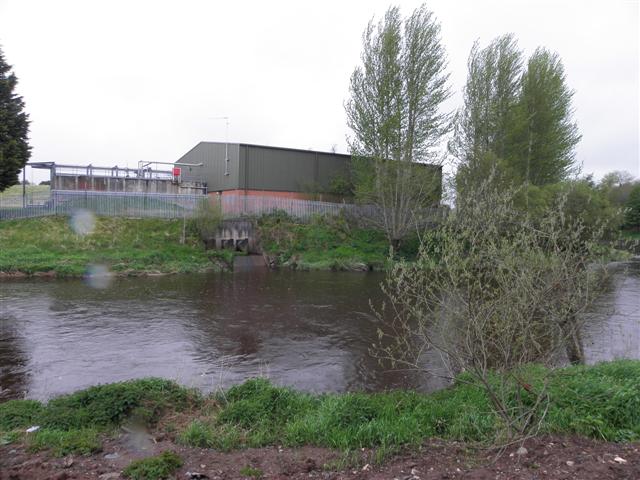
Sewage Treatment Works, Omagh © Kenneth Allen :: Geograph Ireland

In 2002 things were looking to be changed.  For decades domestic water and sewage services in N I had been provided without charge to customers.  Only non-residential customers received water bills and had water meters.  So suddenly out of the blue (or a government think tank), it was muted that all N Ireland water and sewerage services would become ‘self-financing.  Over the next two years exhaustive and extensive consultations on water reforms were carried out, with the aim of introducing water meters for new homes as well as water and sewer charges for all domestic customers.  The water charges plan was included in the Water and Sewerage Services (Northern Ireland) Order 2006, introduced by the then secretary of states Peter Hain; and it was in parallel, that Northern Ireland Water Limited was created in April 2007.  But, due to the anti-water charges campaign, in 2007, the plans for water charges were abandoned.

Northern Ireland Water

File:Water meter with remote reading.jpg – Wikimedia Commons

But as I have alluded to water is a finite resource, and our climate and therefore our weather is changing.  The government is having to look closely at all areas of the country to see if there are ways in which the ‘users’ (that means you) can be made to think more carefully about the usage of resources, and this includes water.  The possibility of water charges being reintroduced is entirely possible when you also look at the debts which the country has ramped up over BREXIT and also Coronavirus (COVID-19), and the government seeks ways in which to reduce the National Debt.


Links:

  • Long after the coronavirus crisis is over, we will live with the debt
  • Northern Ireland Water
  • FOI request-111800- – Northern Ireland Water dated 12 April 2012
  • Monthly amount of rainfall in Northern Ireland from 2015 to 2021
  • Water, water everywhere?
  • FIVE FROM FINLAND: Solutions with water
  • Election 2015: NI political parties in first TV election debate


Filed Under: Community Journalist Tagged With: Brexit, coronavirus, N Ireladn Water, nation adebt, NI Water, Northern Ireland Water, pandemic, Peter Hain, water charges

Categories

Copyright ACOMSDave.com © 2026